Home › Commercial Tuckpointing and Masonry Repair
We perform commercial tuckpointing in Lincoln, NE to maintain brick and stone building envelopes. Our crews remove loose mortar, repoint joints, and repair damaged units so your facade stays watertight and presentable.
Superior Masonry Lincoln provides professional commercial tuckpointing throughout Lincoln, NE, Nebraska and the surrounding area. Our licensed, insured crew delivers safe, clean, on-time work with a free estimate before anything begins. Call (402) 413-7465 or request your free quote.
Commercial tuckpointing for Lincoln brick and block buildings
When commercial masonry starts to fail, it usually shows up first in the joints, not the bricks. Commercial tuckpointing is the process of grinding out failed mortar joints and packing in new mortar that is matched to the building. At Superior Masonry Lincoln, we focus on keeping your building watertight and structurally sound so you avoid interior damage and more expensive structural repairs.
On a typical Lincoln project we start with a full walkaround of the property. We look for hairline cracking along long walls, open vertical joints at expansion breaks, sand-like mortar that can be scraped out with a key, and stains that show water is moving through the wall. Flat roof and parapet walls are a special focus in Nebraska because freeze-thaw cycles push water into the joints. We take photos at problem spots and talk through which issues are cosmetic and which are urgent.
If tuckpointing is the right solution, we map out elevations and sections so we are clear on how much area needs work. On commercial jobs in Lincoln, this can be anything from a single loading dock wall to an entire multi-story façade. We then plan access, which can mean lifts, scaffolding, or swing stages, and schedule work so it disturbs tenants and operations as little as possible.
Step-by-step: how Superior Masonry Lincoln performs commercial tuckpointing
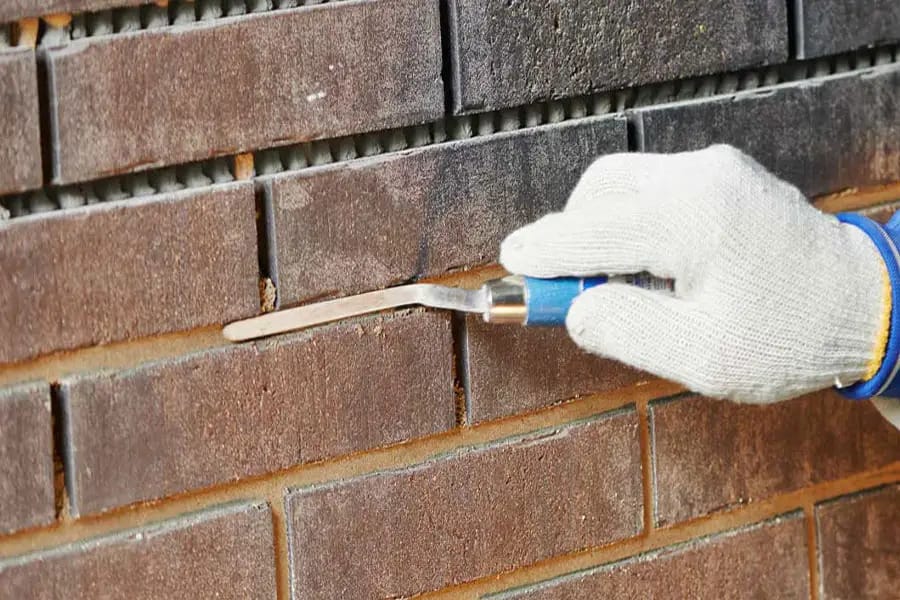
Proper commercial tuckpointing is a sequence of controlled steps, not just smearing new mortar over old joints. First, we mechanically remove the failed mortar, usually to a depth of 3/4 inch to 1 inch, using tuckpoint grinders with dust collection. On older downtown Lincoln buildings we often use hand chisels in delicate areas to protect softer historic brick. We stay inside the edges of the brick to avoid breaking corners.
Next, we clean the joints. All debris and dust must come out so new mortar bonds correctly. We blow out joints with compressed air and brush them if needed. If the bricks are very dry, which happens often on south and west elevations in Nebraska sun, we lightly dampen the joints so the new mortar does not dry too quickly and crack.
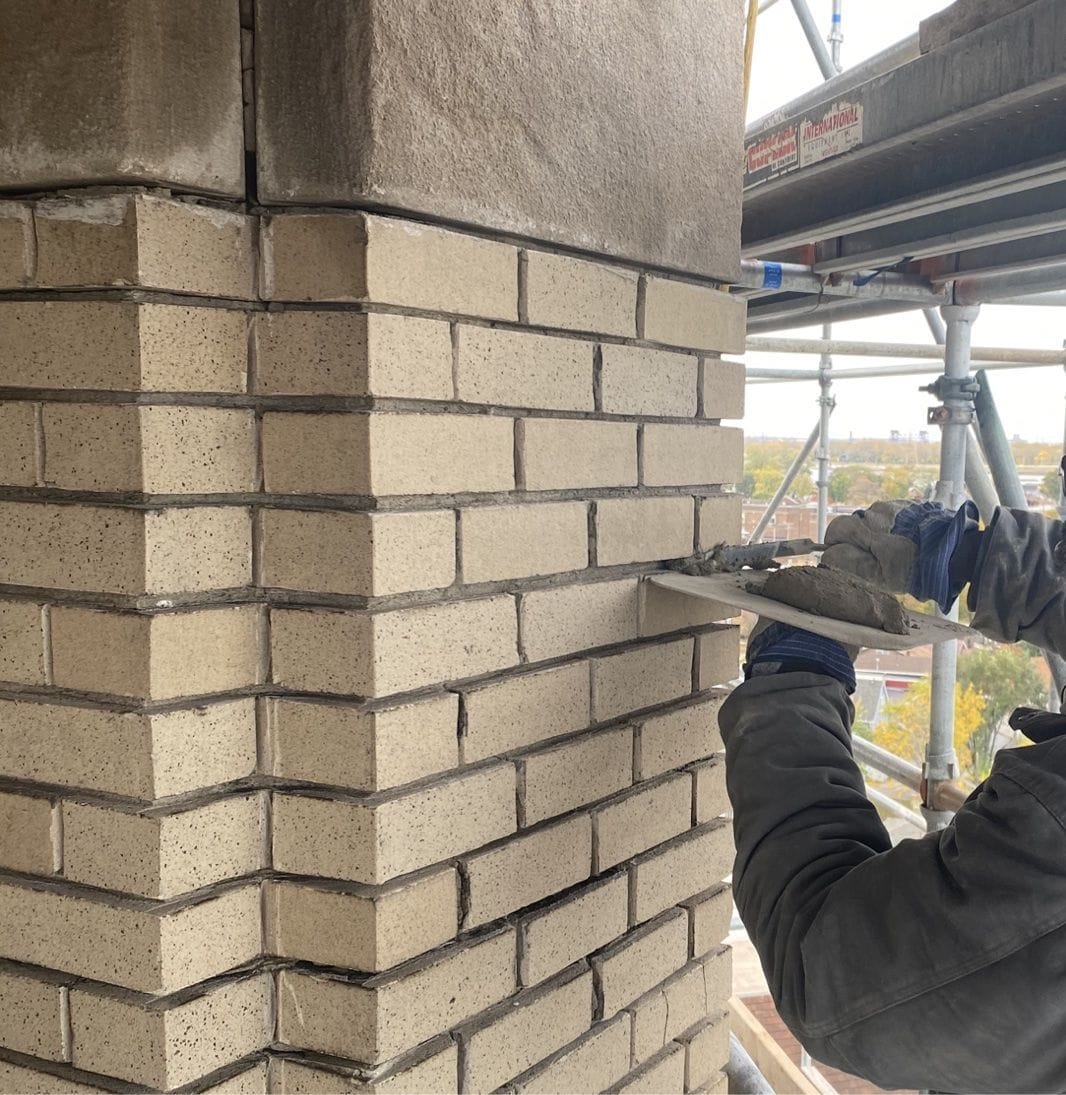
We then install new mortar in lifts, packing it tight to the back of the joint and striking the surface to match the existing joint profile, whether it is concave, flush, or weathered. For commercial properties, appearance matters, but watertightness matters more. We pay close attention to head joints over windows, control joints, and transitions into different materials such as metal panels or EIFS.
On visible street fronts or brand-facing elevations, we can use true tuckpointing with two colors if the original design used a contrasting joint. That involves filling the joint with a base mortar that matches the brick, then tooling in a narrow line of different colored mortar centered in the joint. It costs more and takes more time, but it can restore a historic look for older Lincoln storefronts and campus buildings.
After the mortar has set, we clean the wall, usually with a low-pressure wash and, if appropriate, a manufacturer-approved masonry cleaner. We avoid harsh acids on Nebraska limestone and softer brick. For many commercial clients we finish by applying a breathable water repellent on targeted areas like parapets and chimney stacks to reduce future moisture issues.
Commercial masonry repair beyond the joints
Commercial tuckpointing often goes hand in hand with broader masonry repair. At Superior Masonry Lincoln we frequently see issues that start with moisture movement and end with loose brick or damaged block. When we inspect, we look at the whole wall system: brick, block, lintels, caps, and sealants.
Common repairs include replacing cracked or spalled bricks, resetting loose units, and rebuilding short wall sections that have bowed or separated. On many Lincoln retail centers, we find brick veneer pulling away above large storefront windows because the steel lintels have rusted and expanded. In those cases, we remove the masonry above the opening, clean or replace the steel, apply proper corrosion protection, reinstall flashing, and then relay the brick with new mortar.
Concrete block (CMU) walls around loading docks and mechanical areas often suffer impact damage and salt exposure from deicing operations. We can cut out and replace individual blocks or rebuild corners. For industrial clients, we often upgrade to more impact-resistant details or add protective bollards, which can reduce recurring repairs.
We also address sealants and flashings, which are often the missing link in commercial masonry repairs. On multi-tenant buildings around Lincoln, we see failed caulking at window perimeters, control joints, and where brick meets different cladding. If these joints are not fixed along with the mortar, water finds its way in again. By combining sealant replacement, flashing repairs at shelf angles, and tuckpointing in one coordinated project, you get a much longer-lasting solution.
Costs, timelines, and what Lincoln property managers should know
Commercial tuckpointing and masonry repair costs in Lincoln, Nebraska are driven mainly by access, extent of damage, and material requirements. Access is often the biggest factor. Single-story work that we can reach with simple lifts is more economical per square foot than tall façades in downtown or around the University of Nebraska area where we need scaffolding or swing stages, sidewalk protection, and traffic control.
The extent of deterioration matters. If mortar is just weathered on the surface, we can sometimes focus on high-exposure zones like parapets and corners. If joints are open and crumbling across entire elevations, it may be more cost-effective to address large continuous areas at once instead of piecemeal spot work that requires setting up and taking down access multiple times.
Material choices also affect price and performance. For historic brick in older Lincoln districts, we may need custom mortar mixes with lower cement content so the mortar is softer than the brick. That protects the masonry but takes more labor and testing. For newer commercial centers, standard Type N or Type S mortars are usually appropriate, but we still color match so repairs do not stand out.
As for timelines, smaller commercial tuckpointing projects can be completed in a few days once access is set, while large façades or campus buildings may take several weeks, especially if we need to work in phases around tenants and public entrances. Many Lincoln property managers schedule this work in spring and fall, since extreme heat and deep winter cold both affect how mortar cures. We adjust work methods and additives for Nebraska weather, but we do not rush curing at the risk of long-term performance.
Before hiring, ask for clear scope drawings or elevation markups, proof of insurance that covers working at height, and references for projects in Lincoln with similar building types. We often suggest including your roofing contractor or facility engineer in the discussion, because masonry, roofing, and drainage all interact. That coordination can prevent surprises, such as finding hidden flashing problems halfway through the job.
Local codes, safety, and why owners choose Superior Masonry Lincoln
Commercial tuckpointing and masonry repair in Lincoln is not just cosmetic maintenance. Poor masonry can trigger water intrusion, mold, and even safety concerns that catch the attention of building inspectors or insurers. We stay familiar with local expectations, including the City of Lincoln Building and Safety Department requirements for façade work, scaffolding, and work near public sidewalks.
For downtown projects or work close to public right-of-way, permits and pedestrian protection may be required. We coordinate with the city on any needed barricades or sidewalk closures and provide the documentation property managers often need for their risk managers. We use OSHA-compliant fall protection, anchor systems for swing stages where applicable, and dust controls to minimize disturbance to neighboring businesses and tenants.
Owners and managers in Lincoln choose Superior Masonry Lincoln because we give straight answers about what truly needs to be done now and what can safely wait. Instead of quoting only a full-building restoration, we often break the work into phases, such as immediate leak repairs at parapets and window heads, then planned tuckpointing of remaining elevations over several budget cycles. We document conditions with photos and written notes so you can justify capital spending.
We are also used to working around occupied buildings. In office parks and medical facilities, that means scheduling louder grinding work outside of peak patient or client hours. In retail, it means keeping entrances open, maintaining clear signage, and protecting glass and storefronts from dust. Our goal is to restore your masonry without disrupting your tenants or your revenue.
If you manage or own a commercial property in Lincoln and are seeing cracking, loose mortar, or water staining on interior walls, commercial tuckpointing and masonry repair is likely the next right step. Superior Masonry Lincoln can inspect, explain the options in plain language, and complete the work with an eye toward long-term performance, not just quick patching.